Data literacy — the ability to read, interpret, and act on data — has become essential for contact center leaders. As customer interactions generate more data than ever, leaders who understand their numbers can dramatically improve performance, team culture, and customer experience. This isn’t just about reading reports anymore. It’s about transforming raw data into actionable intelligence that drives real results.
What Is Data Literacy?
Data literacy is the ability to read, understand, interpret, and communicate with data effectively. In contact centers, it means being able to look at metrics and dashboards and know what they’re telling you, why they matter, and what actions to take.
Why Does Data Literacy Matter in Contact Centers?
Every call, chat, and support ticket generates data. Average handle time, service level, customer satisfaction, first-call resolution, adherence rates — these metrics are the pulse of your contact center. They tell you whether you’re winning or losing, but only if you know how to read them.
The problem? Most organizations are drowning in data but starving for insights. You’ve got dashboards packed with numbers, but no one’s quite sure what they mean or what to do about them. Teams stare at colorful charts during weekly meetings, nod along, and then go back to managing by instinct rather than information.
This disconnect is expensive. It leads to missed opportunities, wasted resources, and frustrated teams who feel like they’re flying blind despite having all the instrumentation right in front of them.
Data literacy closes that gap. It gives contact center leaders the ability to read data with confidence, spot trends and patterns that actually matter, communicate insights clearly to their teams and executives, make decisions grounded in evidence rather than gut feelings, and ask the right follow-up questions when something looks off.
The best reporting tools in the world won’t drive results if your team can’t interpret what they’re seeing. But when your leaders are data literate? Every metric tells a story. Every dashboard becomes a roadmap. Every number connects to an action.
Why Contact Centers Need Data-Literate Leaders
Data runs the operation now
Contact centers generate massive amounts of data from voice, chat, social media, CRM systems, QA tools, and workforce management platforms. This isn’t just reporting data — it’s operational intelligence that flows in constantly throughout the day.
Leaders can’t wait for analysts to translate everything anymore. By the time a report gets written, formatted, and distributed, the insights are already stale. You need leaders who can understand this information themselves, in context, as it happens.
Decisions happen in real time
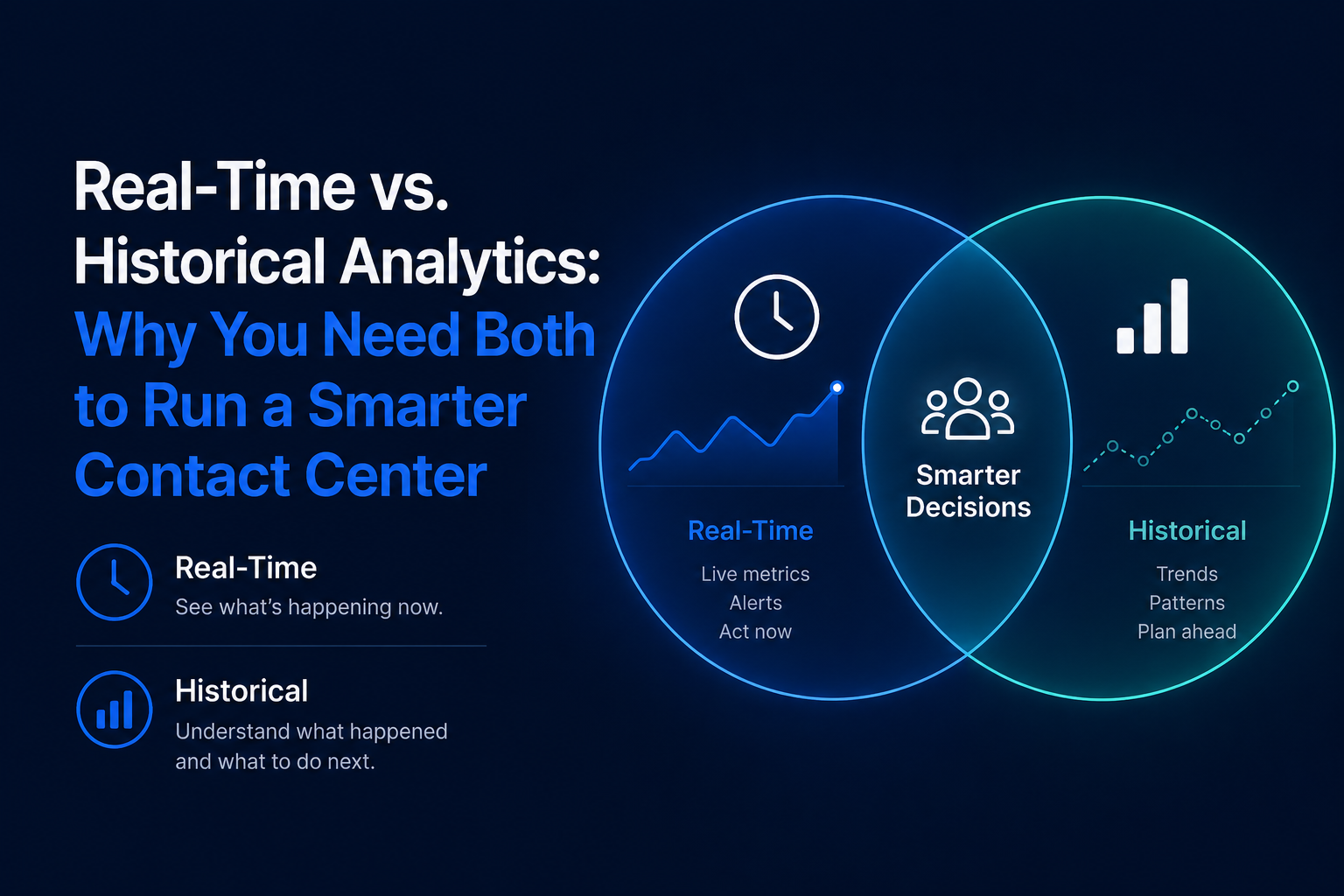
You can’t wait for next week’s summary report anymore. Modern contact centers move too fast for that. Supervisors need to look at a real-time dashboard and take action immediately. Adjust staffing. Manage queues. Address a sudden spike in handle time. Route overflow to the right teams.
That requires understanding what you’re looking at, right now, without second-guessing yourself or waiting for someone else to confirm your interpretation.
Customer experience depends on it
Data literacy connects the dots between metrics and actual outcomes. When leaders understand the “why” behind their numbers, they can directly improve customer satisfaction, loyalty, and operational efficiency.
For example, a data-literate leader doesn’t just see that CSAT scores dropped. They can trace it back to specific interactions, identify whether it’s a training issue, a process problem, or a product defect, and then take targeted action to fix it.
The competitive landscape demands it
Contact centers that leverage data effectively have a significant advantage over those that don’t. They can optimize faster, respond to changes more quickly, and deliver better experiences with the same resources. In a competitive market, that difference matters.
What Problems Does Lack of Data Literacy Cause?
Poor data literacy creates real, measurable problems that ripple through the entire operation.
Decision paralysis happens when managers freeze because they don’t trust their interpretation of what they’re seeing. They call unnecessary meetings to “discuss the numbers” when what they really need is the confidence to act on what’s obvious.
Conflicting priorities emerge when different departments use different definitions for the same metrics, creating silos and confusion. Sales celebrates a 90% service level while operations is worried about the same number. Who’s right? Without data literacy, no one knows.
Reactive management means leaders treat symptoms (like long wait times) without understanding root causes. They throw resources at problems without diagnosing whether it’s a capacity issue, a skill issue, a process issue, or something else entirely.
Low morale develops when agents can’t connect their individual metrics to overall success. They feel like they’re being judged by arbitrary numbers that have nothing to do with the quality of service they provide. This breeds cynicism and disengagement.
Wasted technology investment occurs when organizations spend thousands on analytics platforms and then use maybe 10% of the functionality because no one knows how to dig deeper than the default dashboard.
When leaders can’t read the data, they can’t lead with confidence. And teams can tell the difference between a leader who knows what they’re talking about and one who’s just reciting numbers they don’t understand.
How Data Literacy Transforms Contact Center Performance
When data literacy becomes part of your culture, everyone benefits in tangible ways.
Better decisions come when leaders quickly identify outliers, performance trends, and underlying drivers instead of just reacting to surface numbers. They can distinguish between a blip and a trend, between correlation and causation.
Higher accountability develops when everyone understands KPIs the same way. You get alignment and ownership across teams. People stop pointing fingers and start solving problems together because they’re all looking at the same reality.
Improved forecasting happens when data-literate leaders catch early warning signs in the metrics, enabling proactive staffing and resource planning. They see the seasonal pattern emerging before it becomes a crisis. They notice the uptick in a particular issue type before it floods the queue.
Engaged agents emerge when agents understand their own performance data. Coaching sessions become conversations instead of lectures. Agents can self-monitor, set their own goals, and take pride in improvement they can measure.
Faster problem resolution becomes possible because instead of waiting days to escalate an issue and get analysis, teams can identify and address problems the same day they emerge.
Better cross-functional collaboration occurs when contact center leaders can speak the language of data. They communicate more effectively with other departments that already live in that world, like finance, marketing, and operations.
How to Build Data Literacy in Your Contact Center
You don’t need a statistics degree. You just need a practical approach to understanding and communicating metrics.
Step 1: Standardize definitions
Get everyone on the same page about what each metric actually means. What’s your definition of “abandon rate”? How do you calculate “service level”? At what point does a call count as “transferred”?
These might seem like basic questions, but you’d be surprised how often teams are measuring the same thing differently. Shared definitions prevent confusion and build trust. Create a metrics glossary and make it accessible to everyone.
Step 2: Teach storytelling with data
Train managers to explain metrics in plain English, not jargon. For example:
“Our AHT went up 15% last week because the new call routing system is sending more complex calls our way. The good news is our first-call resolution improved by 8%, which means we’re handling these harder calls successfully.”
Turning data into narrative builds understanding and engagement. It helps people see the connections between different metrics and understand trade-offs.
Step 3: Make dashboards interactive
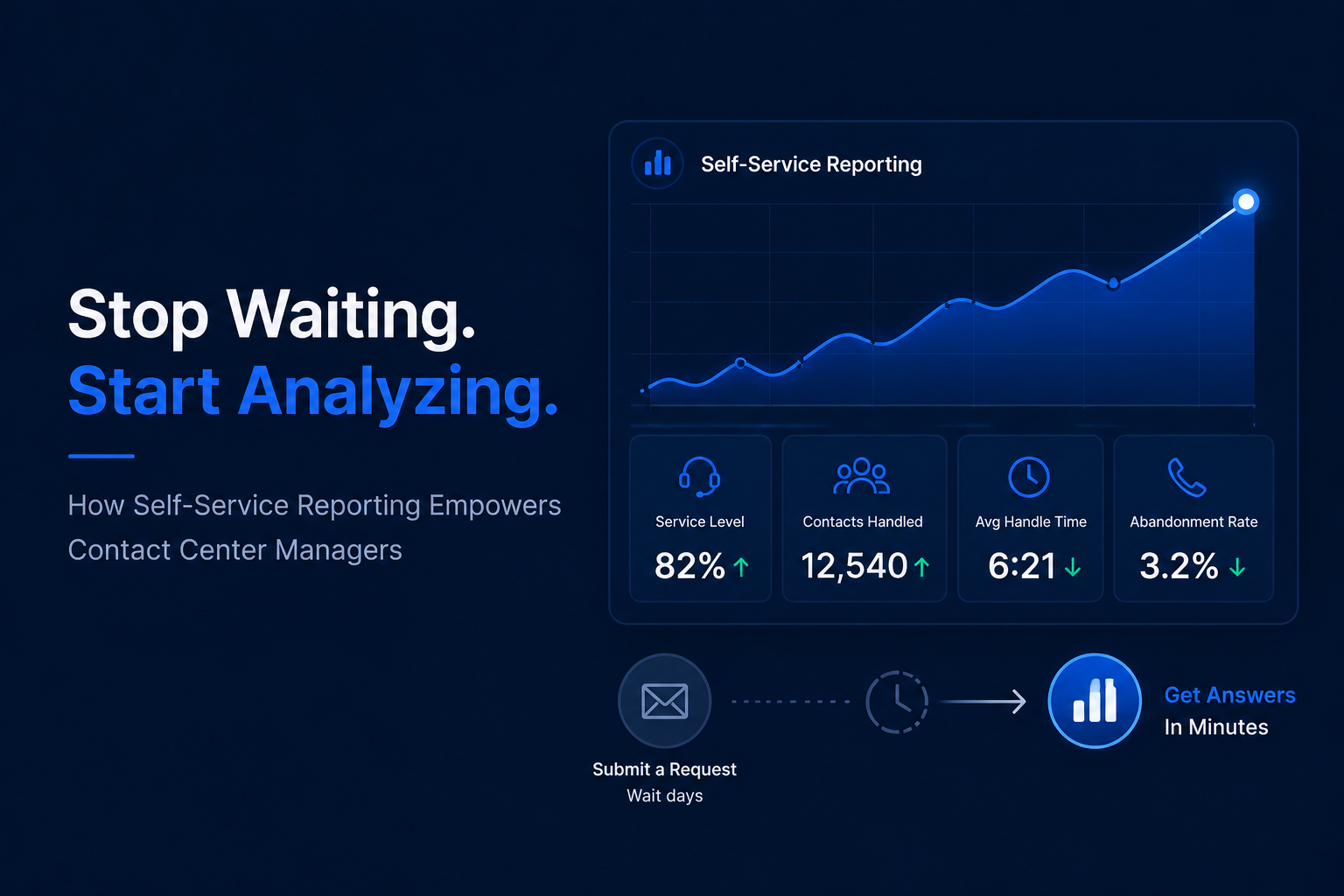
Use tools that let leaders explore data hands-on. When they can filter, drill down, and visualize metrics themselves, they build confidence quickly. They learn by doing, not by watching someone else do it.
Static reports create passive consumers of data. Interactive dashboards create active investigators.
Step 4: Create visibility
Put live dashboards in common areas where teams naturally gather. Transparency encourages questions and collaboration instead of secrecy and speculation.
When data is visible, it becomes part of the conversation. People notice things. They ask questions. They learn from each other.
Step 5: Reward curiosity
Celebrate when someone uses data to spot an improvement opportunity, even a small one. Share the story of how they found it and what impact it had. This reinforces the culture you’re trying to build.
Make it safe to ask “dumb” questions about data. The only dumb question is the one that doesn’t get asked.
Step 6: Start with fundamentals
Don’t try to make everyone a data scientist overnight. Start with the core metrics that drive your operation. Make sure everyone understands those cold before moving to more advanced analysis.
Build confidence with simple wins before tackling complex problems.
How Brightmetrics Enables Data Literacy
Brightmetrics is designed to empower contact center teams with data, not just report on it. The platform makes analytics accessible to people who aren’t technical analysts.
Intuitive visualizations — Complex KPIs become clear, actionable charts anyone can understand. You don’t need to decode what you’re seeing.
Drill-down analysis — Explore the “why” behind every metric without needing technical expertise. Click on a number and see what’s driving it.
Role-based dashboards — Customized views for supervisors, executives, and agents. Everyone sees the data that matters for their role.
Guided onboarding — Built-in training resources help teams interpret and act on their data from day one. You’re not left to figure it out on your own.
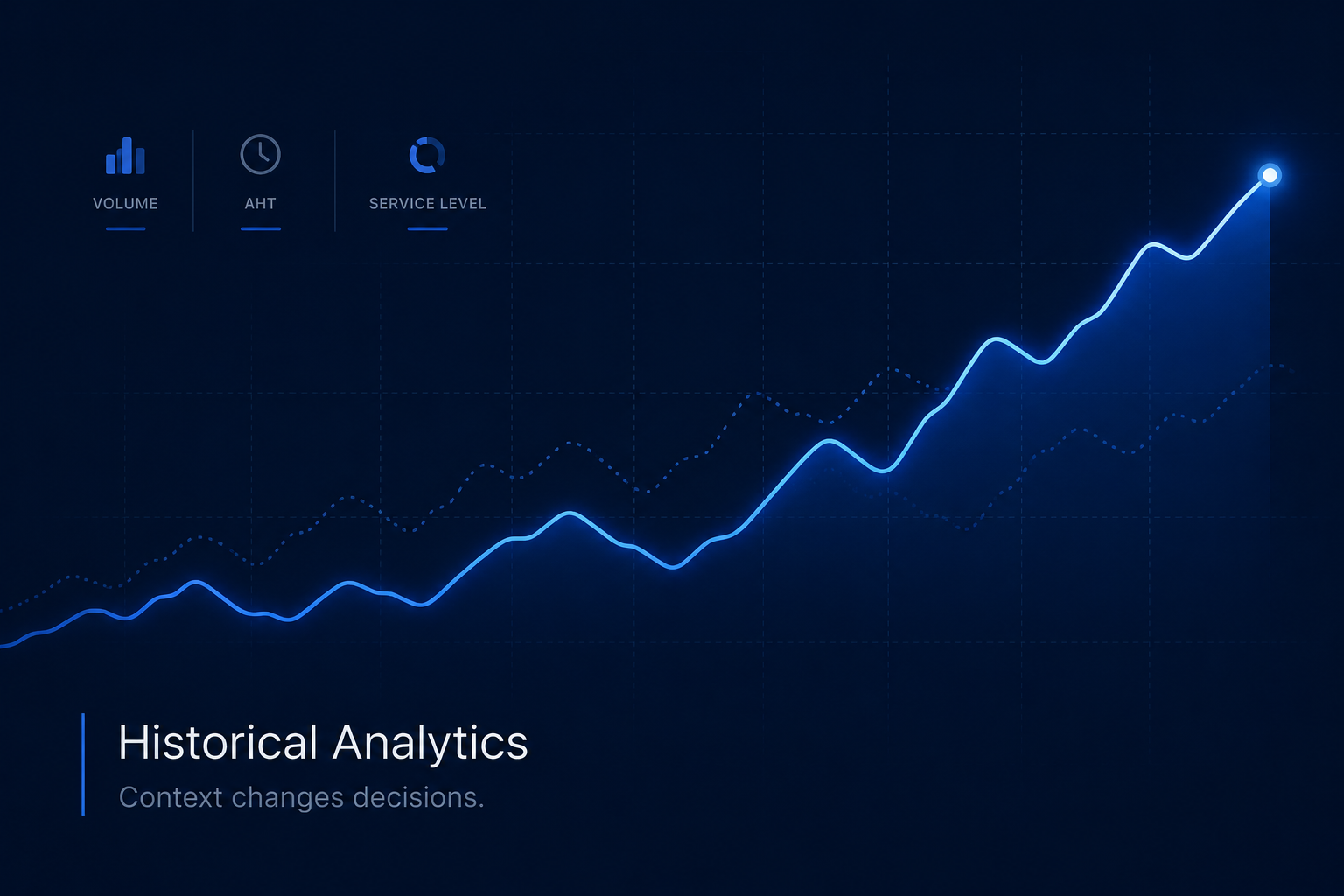
Historical context — Compare current performance to past periods easily, so you can spot trends and seasonal patterns without complex queries.
By making analytics accessible and interactive, Brightmetrics helps every leader — not just data analysts — become confident with their numbers.
Example: From Metrics to Meaning
Your dashboard shows average handle time (AHT) increasing by 12% over the past two weeks. What now?
A data-illiterate leader panics, sends a stern email about efficiency, and creates stress without solving anything.
A data-literate leader asks questions:
- Are calls getting more complex? Check the call types and see if there’s been a shift.
- Did we launch a new product or add process steps recently? Look at the timeline.
- Is this happening across all teams or just certain shifts? Segment the data.
- How does this correlate with first-call resolution and customer satisfaction? Check related metrics.
- Are new hires driving this while they’re still learning? Look at performance by tenure.
With Brightmetrics, you can drill into the data immediately, segment by team or time period, and find actionable insights. Maybe you discover that AHT is up because you’re resolving more issues on the first call. That’s actually good news, not a problem to fix.
Confusion becomes clarity. Anxiety becomes action.
Data Literacy as a Career Advantage
Leadership expectations in contact centers are evolving rapidly. Future directors and supervisors will be evaluated not just on efficiency and satisfaction scores, but on their ability to interpret, communicate, and act on data.
Data-literate leaders can connect team performance directly to business outcomes in language executives understand, present clear evidence-based strategies that get budget approval, drive measurable improvements in customer experience and operational KPIs, identify opportunities for innovation and process improvement, and build credibility with other departments who already speak the language of data.
Data literacy is becoming a leadership superpower. It’s the difference between managers who execute and leaders who transform.
How to Start Your Data Literacy Journey Today
Audit your metrics — Figure out which KPIs actually matter to your operation. You probably have too many. Focus on the vital few.
Empower your team — Make sure everyone knows what those numbers mean and why they matter. Context is everything.
Choose accessible tools — Pick platforms that make exploration intuitive, not intimidating. Technology should lower the barrier to insight, not raise it.
Integrate learning — Make data literacy part of training, coaching, and daily conversations. It can’t be a one-time workshop.
Practice regularly — Set aside time each week to dig into your data as a team. Make it a habit.
It’s not about memorizing formulas or becoming a statistician. It’s about learning to ask better questions and finding meaning in the numbers that surround you every day.
The Future of Contact Center Leadership Is Data-Literate
Contact centers aren’t just service hubs anymore — they’re strategic intelligence centers that generate valuable insights about customers, products, and operations. The leaders who succeed will be the ones who can spot patterns, connect dots, and tell stories through their data.
By building data literacy, you’re not just improving operations. You’re future-proofing your organization for a world where data fluency is as fundamental as communication skills.
The contact centers that thrive in the next decade will be the ones where data literacy isn’t confined to a small analytics team — it’s distributed throughout the organization, from frontline supervisors to senior executives.
Key Takeaways
- Data literacy is now a core leadership skill in contact centers, not an optional nice-to-have. Leaders must be able to interpret metrics and make real-time decisions without waiting for analyst reports.
- Poor data literacy costs money and morale. It leads to decision paralysis, conflicting priorities across departments, reactive management, and disengaged teams who don’t understand how their work connects to success.
- Building data literacy doesn’t require technical degrees. It starts with standardizing metric definitions, teaching data storytelling, making dashboards interactive, creating visibility, and rewarding curiosity.
- Data-literate leaders transform performance. They make better decisions, improve forecasting, increase accountability, engage agents more effectively, and solve problems faster.
- The right tools accelerate data literacy. Platforms like Brightmetrics make analytics accessible and intuitive, allowing leaders at all levels to explore data hands-on without technical barriers.
- Data literacy is a career accelerator. Future contact center leaders will be evaluated on their ability to interpret data, communicate insights, and drive measurable improvements, not just manage day-to-day operations.
Frequently Asked Questions
What is data literacy in simple terms?
Data literacy is the ability to read, understand, and use data to make informed decisions. In contact centers, it means looking at your metrics and knowing what they mean, why they matter, and what to do about them.
Do I need to be good at math to be data literate?
No. Data literacy is more about understanding context and asking good questions than doing complex calculations. You need to understand what metrics mean and how they relate to each other, but you don’t need advanced math skills.
How long does it take to build data literacy in a contact center team?
It varies, but most teams see significant improvement within 3-6 months when they focus on standardizing definitions, providing interactive tools, and making data exploration part of daily routines. The key is consistent practice, not one-time training.
What’s the difference between data literacy and data analysis?
Data analysis is the technical skill of examining data to find insights. Data literacy is the broader ability to read, interpret, and communicate with data. Think of it this way: analysts dig deep into data, while data-literate leaders understand enough to ask the right questions and act on findings.
Which metrics should contact center leaders focus on first?
Start with your core operational metrics like service level, average handle time, first-call resolution, and customer satisfaction. Make sure everyone understands these thoroughly before moving to more complex analysis. Master the fundamentals first.
Can data literacy improve employee engagement?
Absolutely. When agents understand their performance data and see how it connects to team success, they become more engaged. Coaching becomes collaborative instead of corrective, and people take ownership of their improvement.
What tools help build data literacy?
Look for analytics platforms with intuitive visualizations, drill-down capabilities, and role-based dashboards. The tool should make exploration easy, not intimidating. Brightmetrics is specifically designed to make contact center analytics accessible to non-technical users.
How do I know if my team lacks data literacy?
Common signs include decision paralysis when looking at dashboards, different departments using conflicting metric definitions, reactive problem-solving without understanding root causes, and low confidence when discussing performance data.
Is data literacy more important than experience in contact center leadership?
Both matter, but data literacy amplifies the value of experience. Experienced leaders who develop data literacy can validate their instincts with evidence, identify patterns faster, and communicate their insights more effectively to stakeholders.
What’s the first step to improving data literacy in my contact center?
Start by auditing and standardizing your metric definitions. Make sure everyone agrees on what each KPI means and how it’s calculated. This foundation prevents confusion and builds trust in the data.
Take the Next Step
See how Brightmetrics helps contact center leaders become data-literate. Schedule a personalized demo and experience how intuitive analytics can transform your decisions, your culture, and your customer experience.