Sometimes It Looks Like Extra Work, Delayed Decisions, and Questions That Never Get Asked
Most contact center leaders know what obviously broken reporting looks like. Data that is wrong. Reports that do not run. Dashboards that are never updated.
The harder problem is reporting that functions correctly but still does not serve the operation well. Reports that are accurate but not useful. Dashboards that exist but do not get looked at. Data that is technically accessible but practically out of reach.
This kind of reporting failure is harder to see because nothing is obviously wrong. It just quietly costs you time, decisions, and opportunities every day. And by the time it becomes visible, the costs have already accumulated for months.
Signs Your Reporting Is Working Against You
Managers Are Making Decisions Without Data
Not because the data does not exist. Because getting to it takes long enough that it is easier to use judgment and move on. When the friction between a question and an answer is high enough, people stop asking the question.
If you regularly make operational decisions on gut feel that you know data could inform, your reporting is not accessible enough to be useful. And the risk is not just individual decisions. It is that the team learns data does not actually change how things work, which makes future adoption harder.
The Same Questions Come Up in Every Meeting
If your weekly operations meeting consistently involves someone pulling up a spreadsheet to answer a question that should already be visible, that question should be on a dashboard. The repeated manual retrieval is not just inefficient. It signals to everyone in the room that data is not really embedded in how you operate. Meeting time goes to data gathering instead of decision-making. Momentum gets lost while someone hunts for a number that should have been ready.
Reports Arrive After the Decision Point Has Passed
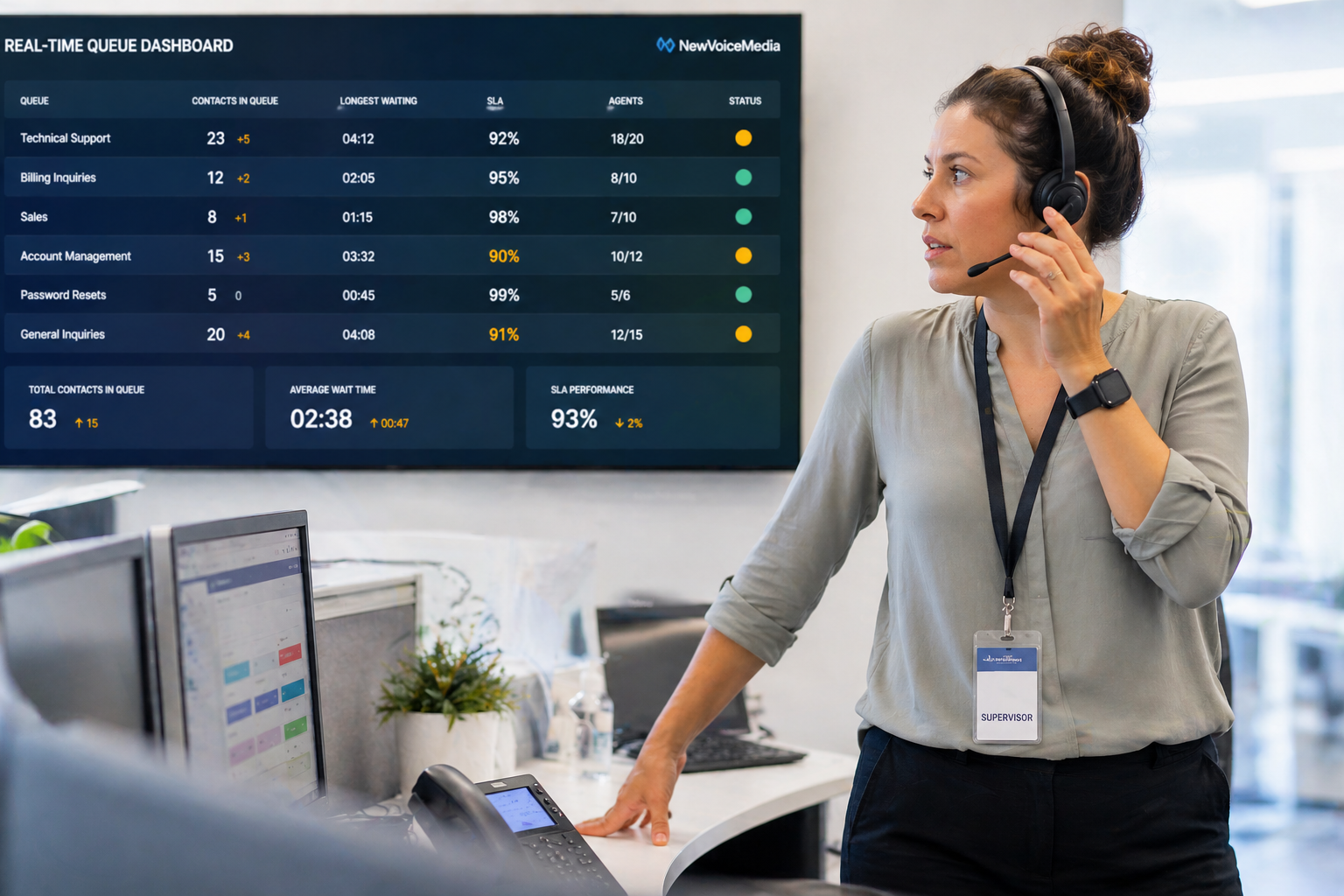
A staffing report that arrives on Friday for decisions that needed to be made on Wednesday is not a reporting tool. It is a historical record. Useful reporting arrives when decisions need to be made, not after.
If you regularly receive reports that confirm what you already figured out through other means, your reporting cadence and your decision cadence are not aligned.
Different People Have Different Numbers for the Same Metric
When two managers refer to different service level numbers in the same meeting, someone is using a different source, a different time window, or a different calculation. This creates more confusion than no data at all. Debates about which number is right replace debates about what to do with the number. Nothing gets decided.
If your operation does not have a single agreed source for key metrics, fix that before anything else.
Reporting Lives with One Person
If one analyst or one manager is the person everyone else asks for data, that is not a reporting system. It is a dependency. When that person is out, moves to another role, or leaves, the operation loses its data access. Good reporting distributes access broadly enough that no single person’s absence creates a visibility gap.
The Data Looks at the Past but Does Not Help You Prepare for the Future
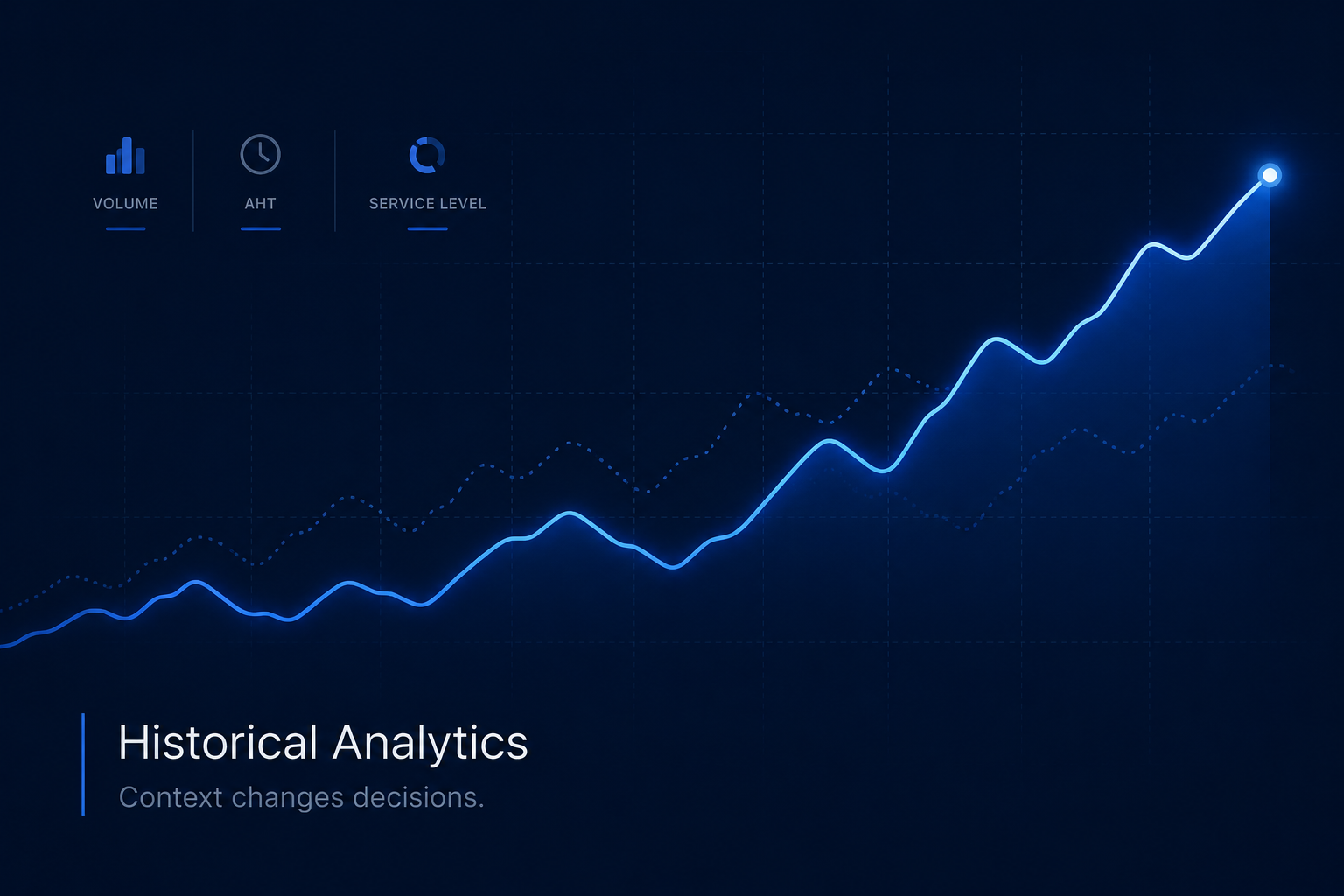
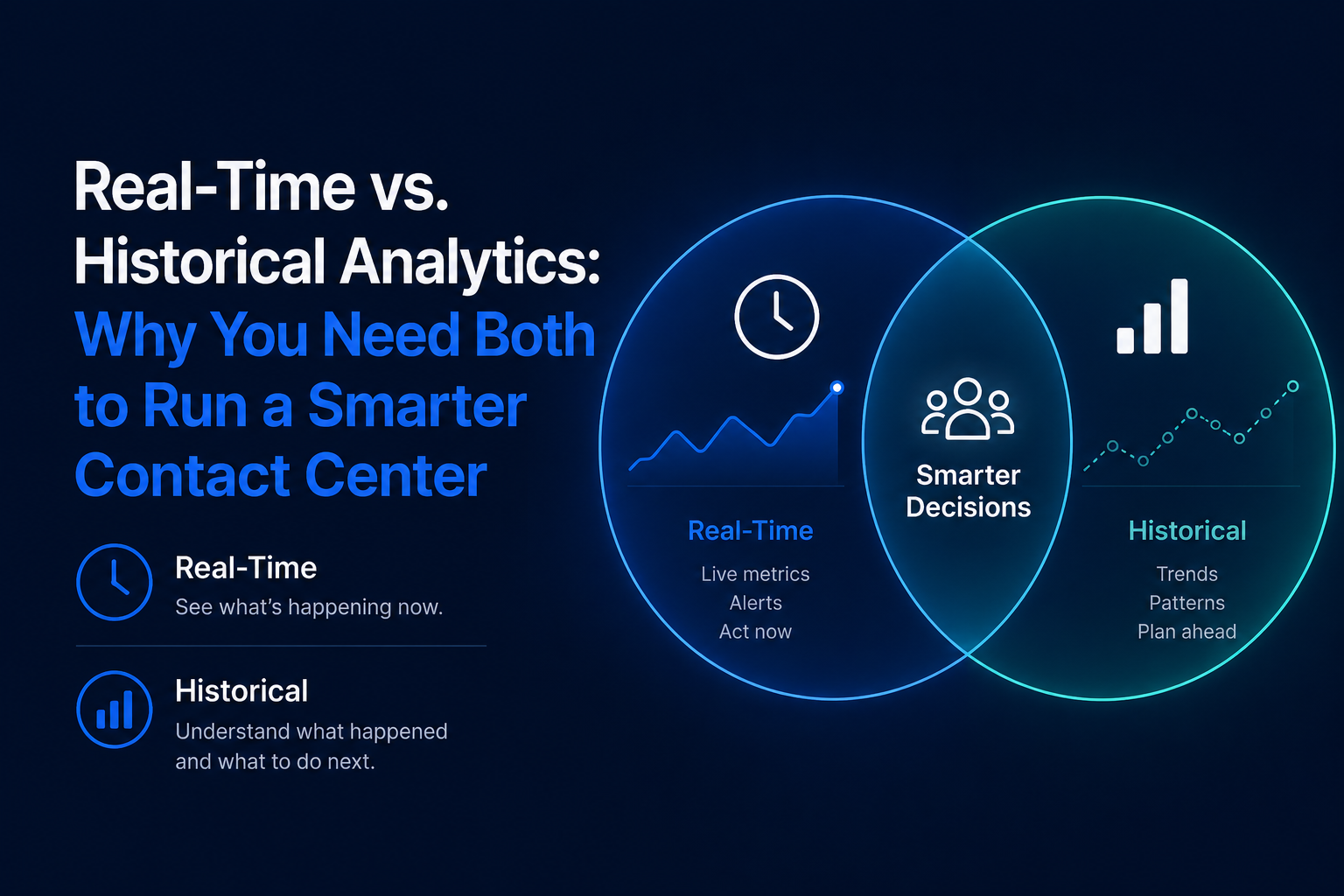
Reporting that only confirms what happened is less valuable than reporting that helps you see what is coming. If your reports describe last month but do not help you identify patterns or flag emerging issues, volume patterns build unnoticed. The Monday morning spike was not anticipated. The staffing case cannot be made because the trend data requires a project to retrieve.
How to Fix It
The practical path forward starts with the decisions that get made most frequently and most consequentially in your operation. Ask whether data is consistently informing those decisions. If not, ask why.
The answer is usually one of three things: access is too slow, the data is not organized in a way that answers the right question, or the right people do not have access at all. Identify the highest-friction point and fix that first. One improvement that actually changes behavior is worth more than a comprehensive analytics strategy that stays on a slide.
Then build outward. Once the most consequential decisions are consistently informed by data, extend the same access to the next tier of decisions.
Frequently Asked Questions
How do you know if your contact center reporting is actually useful? Ask whether managers use data before making operational decisions or after. Ask whether the same questions come up repeatedly in meetings that should already be answered by a dashboard. The answers tell you whether reporting is embedded in how you operate or sitting alongside it.
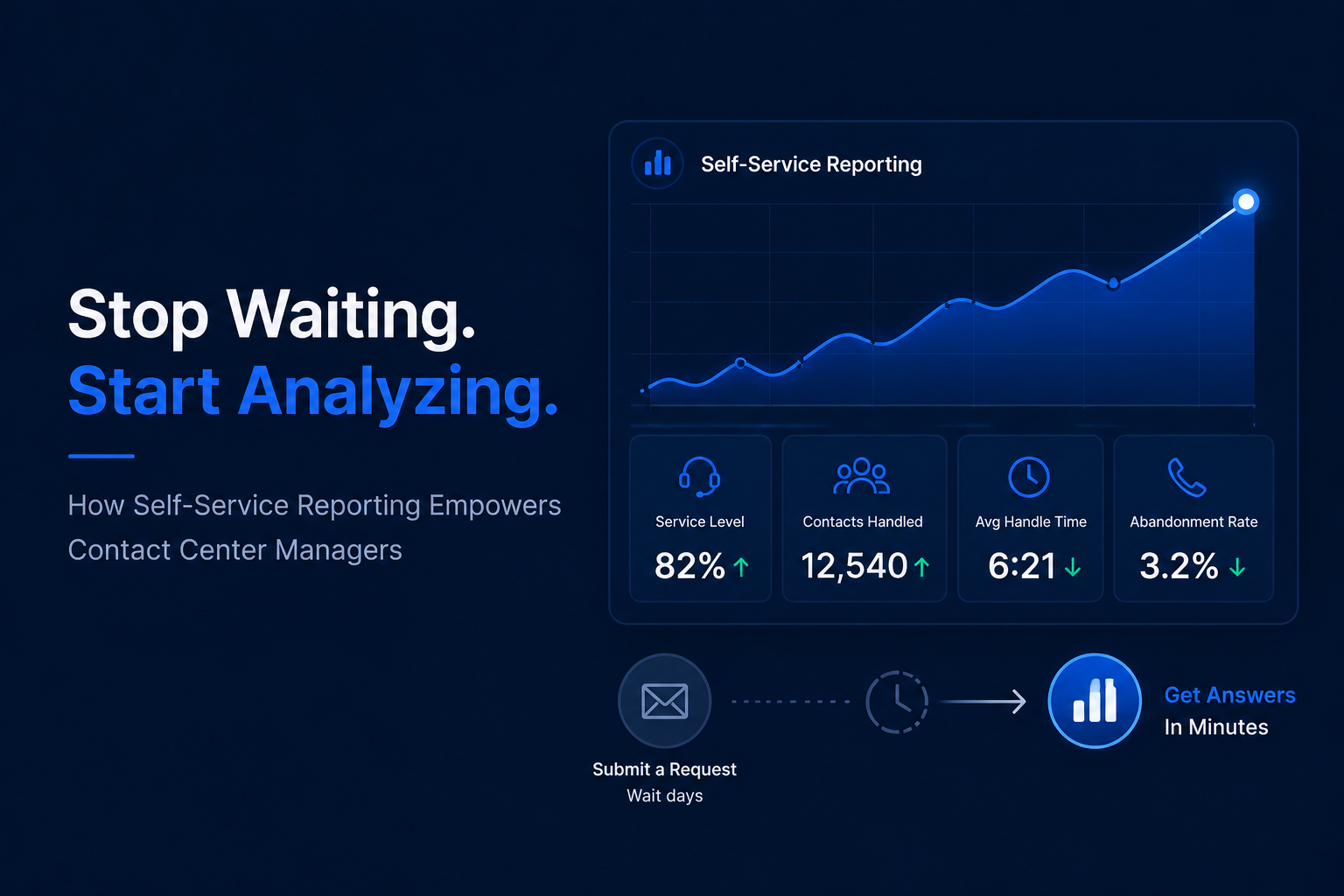
What is the most common contact center reporting problem? Access friction. When getting data requires a request, a wait, and a manual step, usage drops and decisions get made without the data that should inform them. The fix is self-service access for the people who make operational decisions.
How do you fix contact center reporting that is not working? Identify the three to five decisions that get made most frequently and most consequentially. Ask whether data is consistently informing those decisions. If not, ask why. The answer is usually access, timing, or the data not being organized in a way that answers the right question. Fix the highest-friction point first.
Can you fix reporting without replacing your contact center platform? Yes. Your platform is capturing the data. The issue is access and presentation. Brightmetrics adds the reporting and analytics layer on top of your existing Genesys Cloud, Mitel, or RingCentral platform without requiring any platform changes.
The Bottom Line
Reporting that is working does not draw attention to itself. It just makes operations run smoother, decisions happen faster, and problems get caught earlier.
Reporting that is not working does not always announce itself either. It shows up as extra work, delayed decisions, and questions that never get asked because the answer takes too long to find.
The starting point is being honest about which one you have. If any of the signs above are familiar, the reporting infrastructure is costing you more than it should.
Brightmetrics is built to fix the most common version of this problem: data that exists in your contact center platform but is not accessible enough to change how you operate. The data you already have becomes accessible in the way you actually need it.