The Moment You Know There Is a Gap
You need to answer a question. Not a complicated one. Something like: how did service level trend last quarter, or which queue had the highest handle time on Thursday afternoons? But if you’re running into contact center reporting gaps, those answers may not be as easy to find as you’d expect.
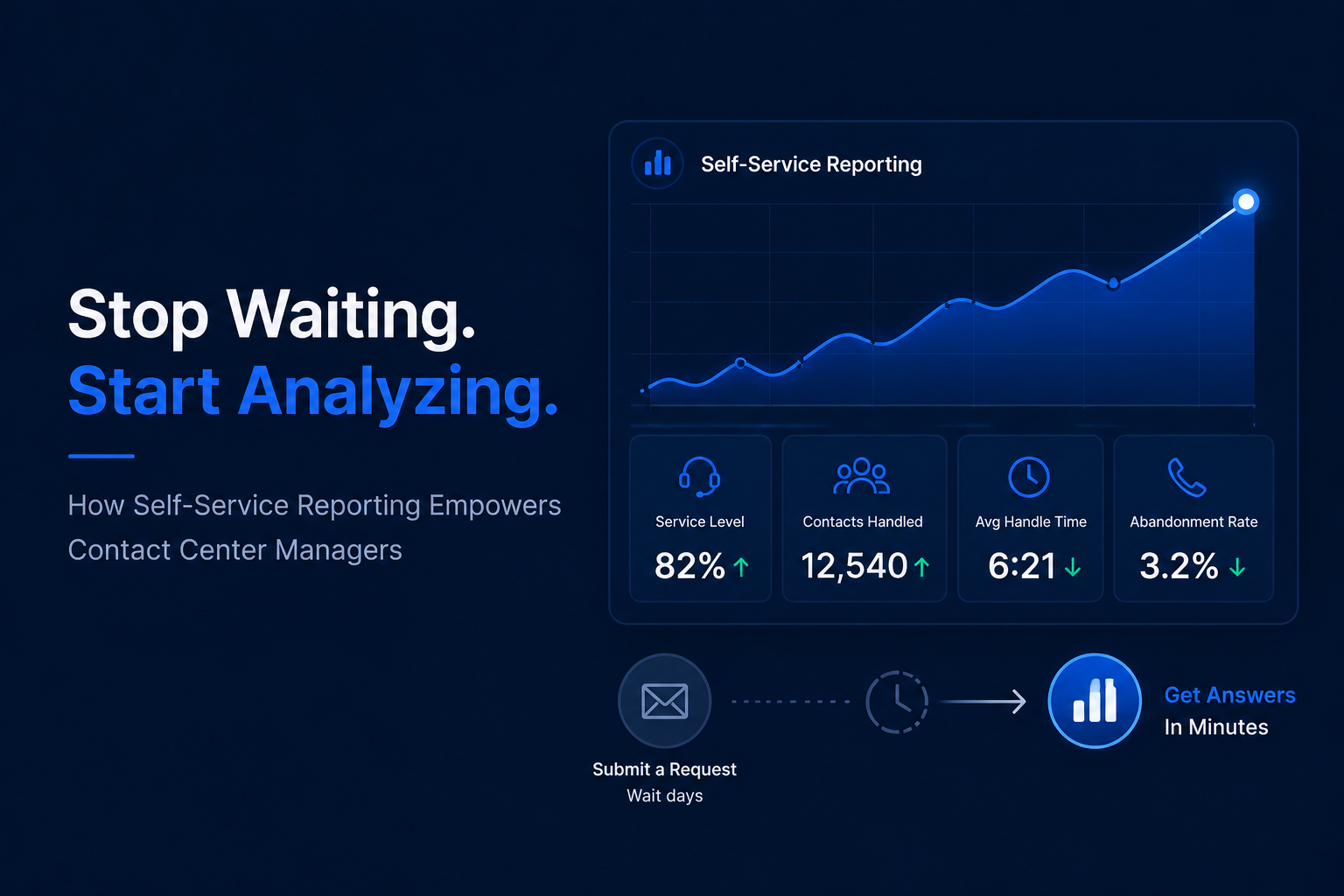
You go to your platform. You click around. The report you need either does not exist, takes longer to configure than the question should warrant, or comes back in a format that requires you to export it and rebuild it in a spreadsheet before it tells you anything useful.
That is the moment most contact center managers discover the gap between what their platform captures and what they can actually see.
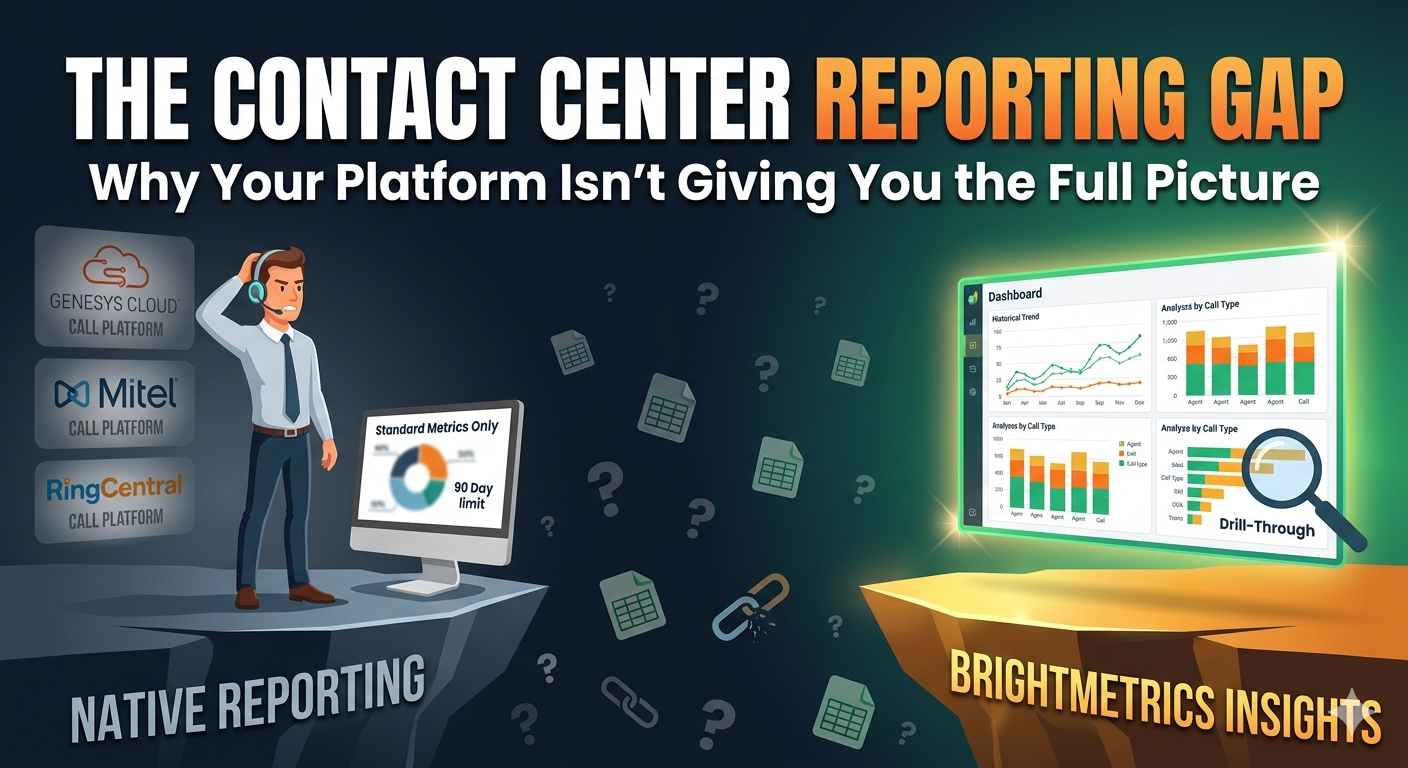
Genesys Cloud, Mitel, and RingCentral are powerful platforms. They handle routing, queuing, agent management, and a lot more. But capturing data and making it accessible are two different things. And when managers cannot get to the data they need, they either spend time working around the tool or make decisions without the information they should have.
What Native Reporting Does Well
To be fair, the built-in reporting in these platforms covers the basics well. Real-time queue status, standard metric summaries, daily activity snapshots. For many operational moments, that is enough.
A supervisor watching live queues does not need a separate tool. A manager reviewing yesterday’s call volume can usually find that in the platform. The gaps show up when you need more than the basics, and in contact center operations, you regularly do.
Where Native Reporting Falls Short
Historical Depth Is Limited
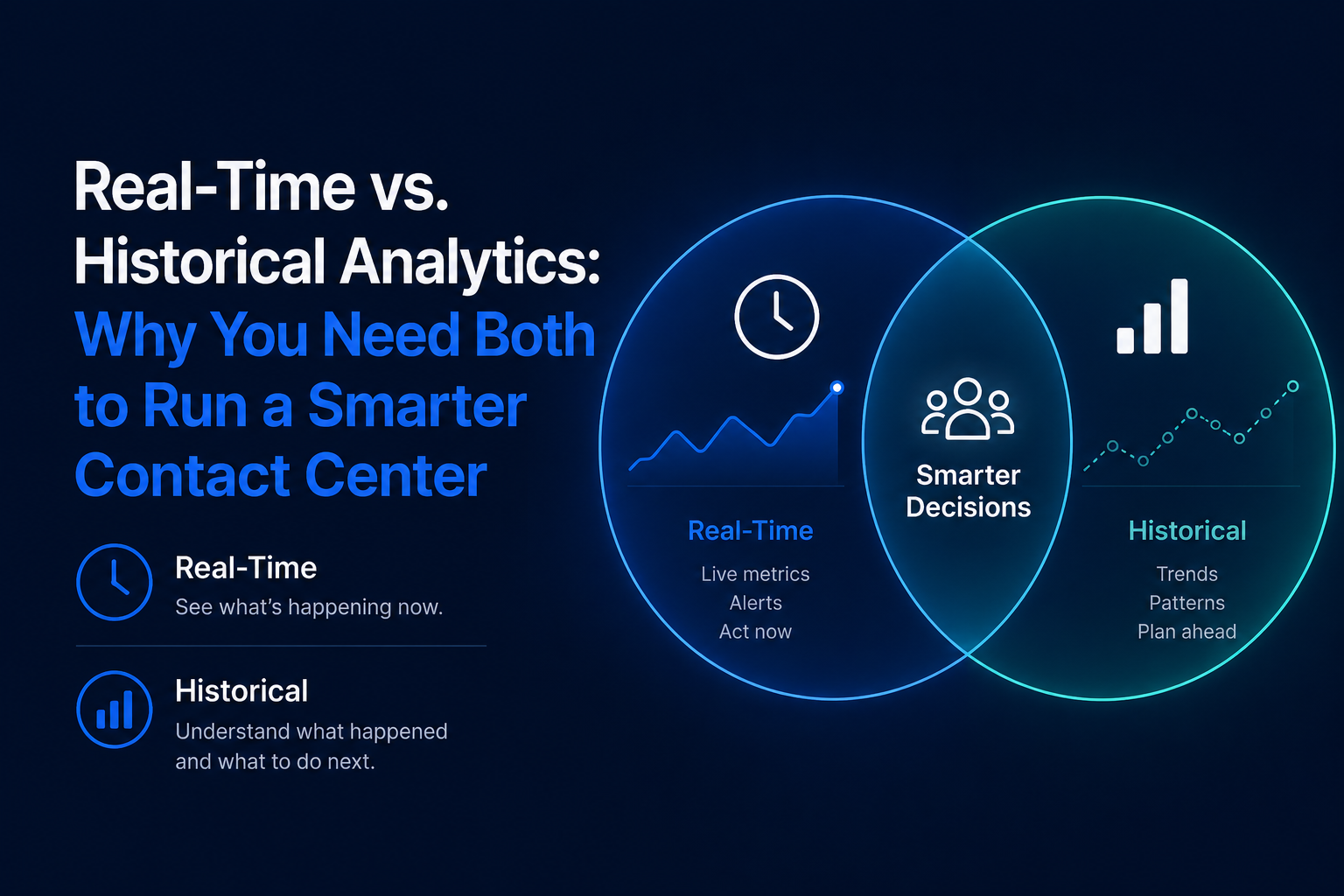
Most native reporting tools show recent data well. Going back 90 days, six months, or a year to identify trends is often where the friction starts. Reports are slower, harder to configure, or not available at the granularity you need.
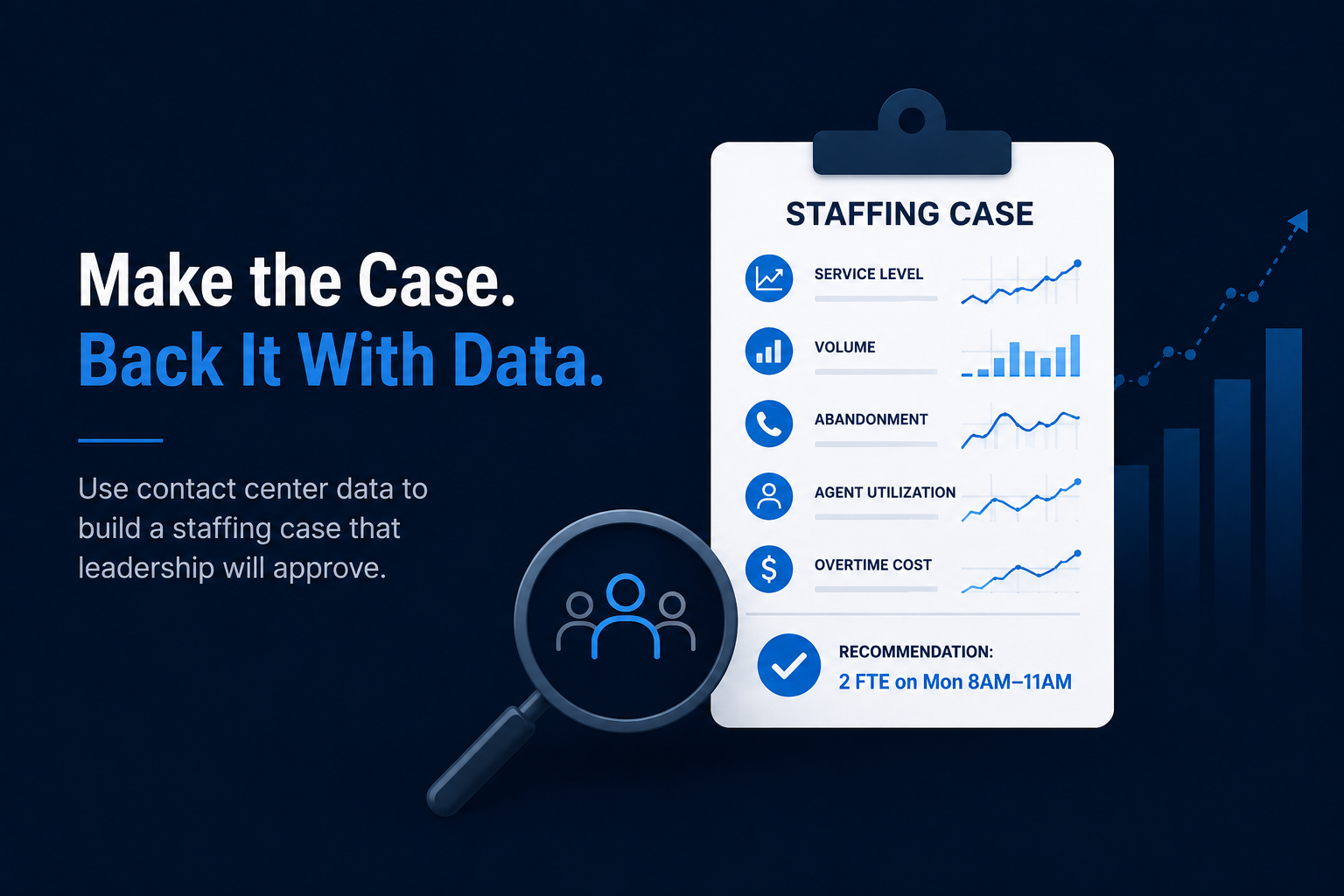
The decisions that require historical context, staffing plans, performance reviews, budget justifications, compliance evidence, are exactly the decisions where native tools struggle most. Which means those decisions get made on incomplete data, or not made at all until someone initiates a project to get the numbers.
Customization Is Constrained
The metrics you can see and how you can slice them are largely defined by the platform. If you want to combine data in a way the platform did not anticipate, or build a view that works for your specific operation, you are often working against the tool rather than with it. The result is that most managers settle for a view that is close enough but never quite right.
Drill-Through Is Shallow
A summary metric looks fine. Then something changes and you need to know why. Which agents? Which call types? Which hours? Native tools often let you see the top level but make it hard to get to the detail quickly.
Without that drill-through path, a metric can move and you have no clean way to understand what drove it. You end up exporting to a spreadsheet and building your own analysis, which takes time and introduces the possibility of error. Most managers stop asking these questions because the path to the answer is too long.
Cross-Platform Visibility Is Difficult
If your operation uses more than one platform, or if contact center data needs to be viewed alongside other business data, native reporting keeps those views separate. There is no unified picture without significant manual work.
Report Generation Requires Technical Knowledge
Building a custom report in most native tools requires either technical skill or patience with an interface that was not designed for non-technical users. That means reporting often becomes a bottleneck: either waiting for someone who knows how to build the report or settling for a view that is close enough but not what you actually needed.
What the Gap Actually Costs
The cost of these gaps does not show up in a line item. It shows up in time and decisions.
A supervisor who cannot quickly answer “what happened last Tuesday” spends more time investigating and less time managing. A manager who cannot easily pull trend data for a staffing conversation goes into that meeting underprepared and often loses the ask. A director who needs compliance evidence from last quarter initiates a two-week project instead of pulling a report.
Each of those is a real cost. Not in the sense of a fee paid. In the sense of decisions made with less information than they should have, and problems that get caught later than they needed to be.
What to Watch Out For
The most common mistake is assuming that the gap is a platform problem that will be fixed in the next update. It is not. These platforms are designed to run contact centers, not to serve as analytics and reporting tools. The reporting layer they include covers common use cases, but it was never designed to replace purpose-built analytics.
A second mistake is solving the problem by adding complexity: custom-built reports that only one person knows how to run, manual exports that require an analyst to interpret, or workarounds that create new fragility every time the platform updates. Those solutions create dependency rather than access.
The right answer is a reporting layer that sits on top of what you already have, connects to the data your platform already captures, and makes that data accessible to the people who need it without requiring a project every time they have a question.
Frequently Asked Questions
Why does native contact center reporting have gaps? Contact center platforms are built to manage operations, not to serve as analytics tools. The reporting capabilities they include cover common use cases but are not designed for the flexibility, historical depth, or ease of use that operational decision-making requires.
Does this apply to Genesys Cloud specifically? Yes. Genesys Cloud has solid native reporting for standard use cases, but managers who need flexible historical analysis, custom dashboards, or deep drill-through capability frequently find the native tools fall short. That is why Brightmetrics exists as a Genesys AppFoundry solution.
What about Mitel and RingCentral? The same pattern applies. Both platforms capture operational data well. Both have native reporting that covers basic needs. Both have gaps when users need flexibility, historical depth, or self-service access to detailed analysis.
Is the answer to replace the platform? No. The platform is doing its job. The answer is to add a reporting and analytics layer purpose-built for the kind of analysis contact center managers actually need.
The Bottom Line
Your contact center platform is not failing you. It is doing what it was designed to do. But the data it captures is more valuable than native reporting tools typically let you access.
The gap is real and it has a real cost in time, decisions, and visibility. Filling it does not require replacing your platform or building a data team. It requires a reporting layer that sits on top of what you already have and makes the data accessible to the people who need it.
Brightmetrics connects to your existing Genesys Cloud, Mitel, or RingCentral deployment and immediately makes the data you already have more accessible, more flexible, and more useful.