Your Busiest Weeks of the Year Are Already in the Data
Every contact center leader knows the holidays are coming. What is less certain is exactly when volume will spike, which queues will feel it first, and how long the surge will last. Most teams plan for it the same way every year: a rough memory of last December, a few conversations with supervisors, and a staffing plan that is part estimate and part hope.
The better answer is sitting in your historical data. Last year’s holiday season already told you what happened, hour by hour and queue by queue. The question is whether you can get to it quickly enough to use it before the rush starts.
What to Pull From Last Year Before You Build a Plan
Volume by Week, Day, and Interval
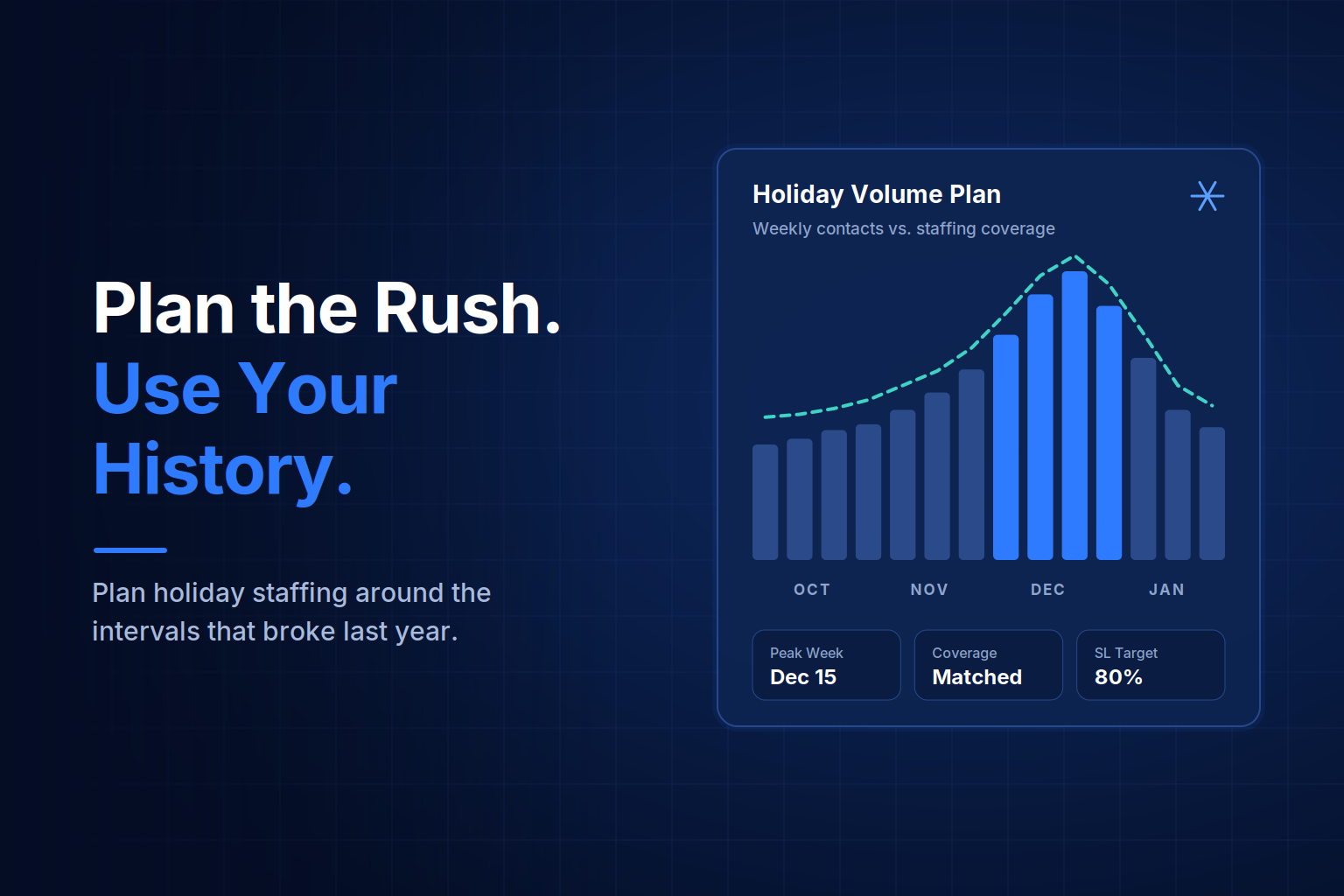
Start with the shape of the season, not the total. Monthly volume hides the story. What you need is how volume moved week over week from October through early January, which days carried the load, and which half-hour intervals broke service level. A season where volume climbs gradually calls for a very different plan than one where it doubles the Monday after a holiday.
Where Service Level Actually Broke
Look for the specific intervals where you missed target, and by how much. If service level fell apart between 10 a.m. and 1 p.m. on the first three Mondays of December, that is a precise staffing problem with a precise fix. Averaged across the month, the same data looks like a slightly disappointing number and nothing more.
Abandonment and Repeat Callers
When hold times climb, customers hang up and call back. That inflates volume and makes the problem look bigger than the underlying demand. Pull abandonment by interval alongside repeat callers so you can separate true demand from the extra load created by long waits.
Queue and Channel Mix
Holiday demand rarely lands evenly. Billing, returns, scheduling, or order status queues may absorb most of the increase while others stay flat. Chat and messaging may grow faster than voice. Knowing which queues moved lets you cross-train and shift agents deliberately instead of spreading everyone thin.
Handle Time
Seasonal contacts often take longer. Newer and temporary agents take longer still. If average handle time rose last December, your staffing math needs to account for it, or even an accurate volume forecast will leave you short.
Turning History Into a Staffing Plan
Once you have last year’s pattern, adjust it for what has changed since. Did overall volume grow this year? Did you add a product line, a location, or a channel? Did a process change reduce certain types of contacts? Apply those changes to last year’s curve rather than starting from a blank sheet.
Then build the plan around the intervals that broke, not the average day. Stagger shifts so coverage peaks when demand does. Schedule training and approve time off away from the weeks that hurt most last year. Line up overflow options, whether that means cross-trained agents from a quieter queue or extended callback windows, before you need them.
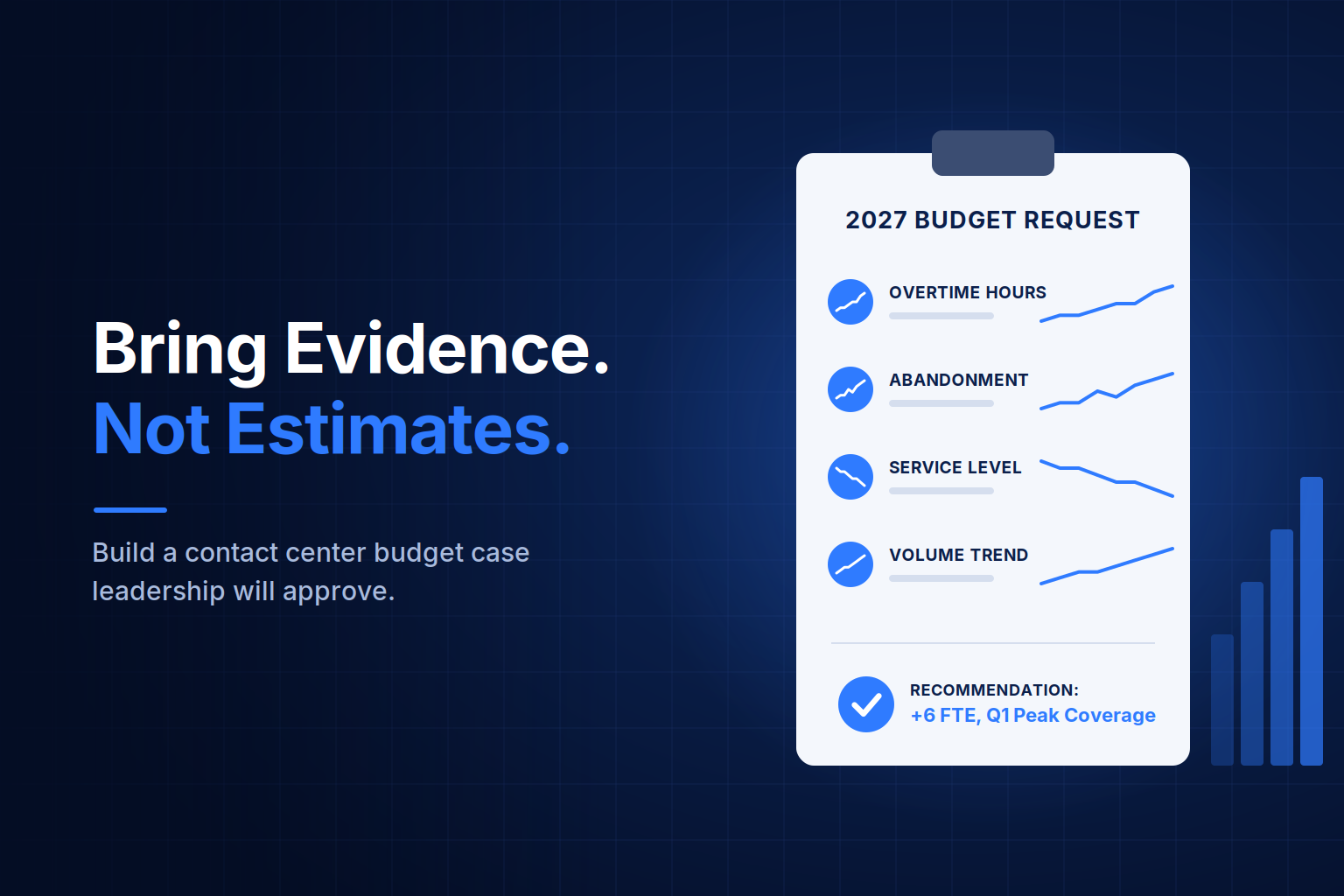
If you need approval for seasonal hires or overtime, this same data is your case. Leadership responds better to a specific list of the intervals you missed last December, along with the coverage that would have closed the gap, than to a general request for more people. We covered that approach in How to Use Contact Center Data to Make a Staffing Case to Leadership.
Watch the Plan While the Season Happens
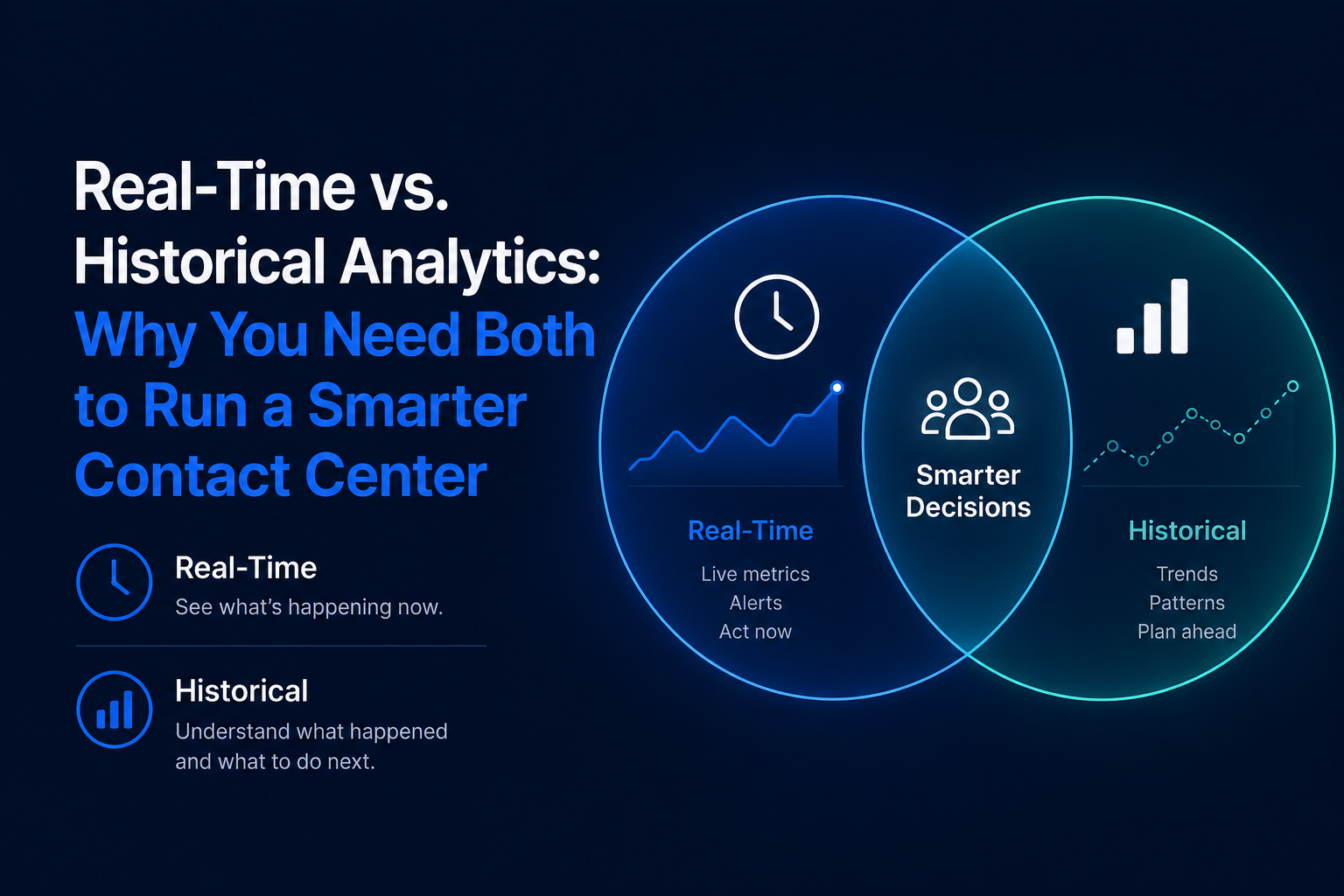
A plan built on history is a starting point. The season will not repeat exactly. Real-time visibility into queue depth, wait times, and agent availability lets supervisors react when a day goes off script, and a short review at the end of each week tells you whether the plan needs adjusting for the next one.
Keep notes as you go. Whatever surprises you this year becomes the most useful input for next year’s plan.
Frequently Asked Questions
When should contact centers start planning for holiday call volume? Early fall is ideal. That leaves enough time to hire and train seasonal staff, adjust schedules, and get approval for overtime before the first spike arrives.
How much historical data do you need to plan for seasonal volume? Last season is the minimum. Two or three seasons are better, because they help you separate real patterns from one-time events like an outage or a product recall.
What is the most common mistake in holiday staffing plans? Planning around monthly or daily averages. Service level breaks in specific intervals, so the plan needs to be built at the interval level too.
Can you get this level of historical detail without changing your phone system? Yes. Brightmetrics adds historical and real-time analytics on top of your existing Genesys Cloud, Mitel, or RingCentral platform, so last year’s interval data is available without a project to retrieve it.
The Bottom Line
The holiday rush is one of the few things in contact center operations you can see coming months in advance. The teams that handle it well are not the ones with the biggest staffing budgets. They are the ones who looked closely at last year before this year started.
Your platform has been recording exactly what happened. See how Brightmetrics makes that history easy to use while there is still time to plan.